


A family walk can be someone’s first experience of giving back. We organized the mini program around events, bringing rules, registration, participation, fundraising progress and follow-up into one place. The current home screen features the Jinshan family walk alongside quick links to charity events, community updates and participation history.
Event photos
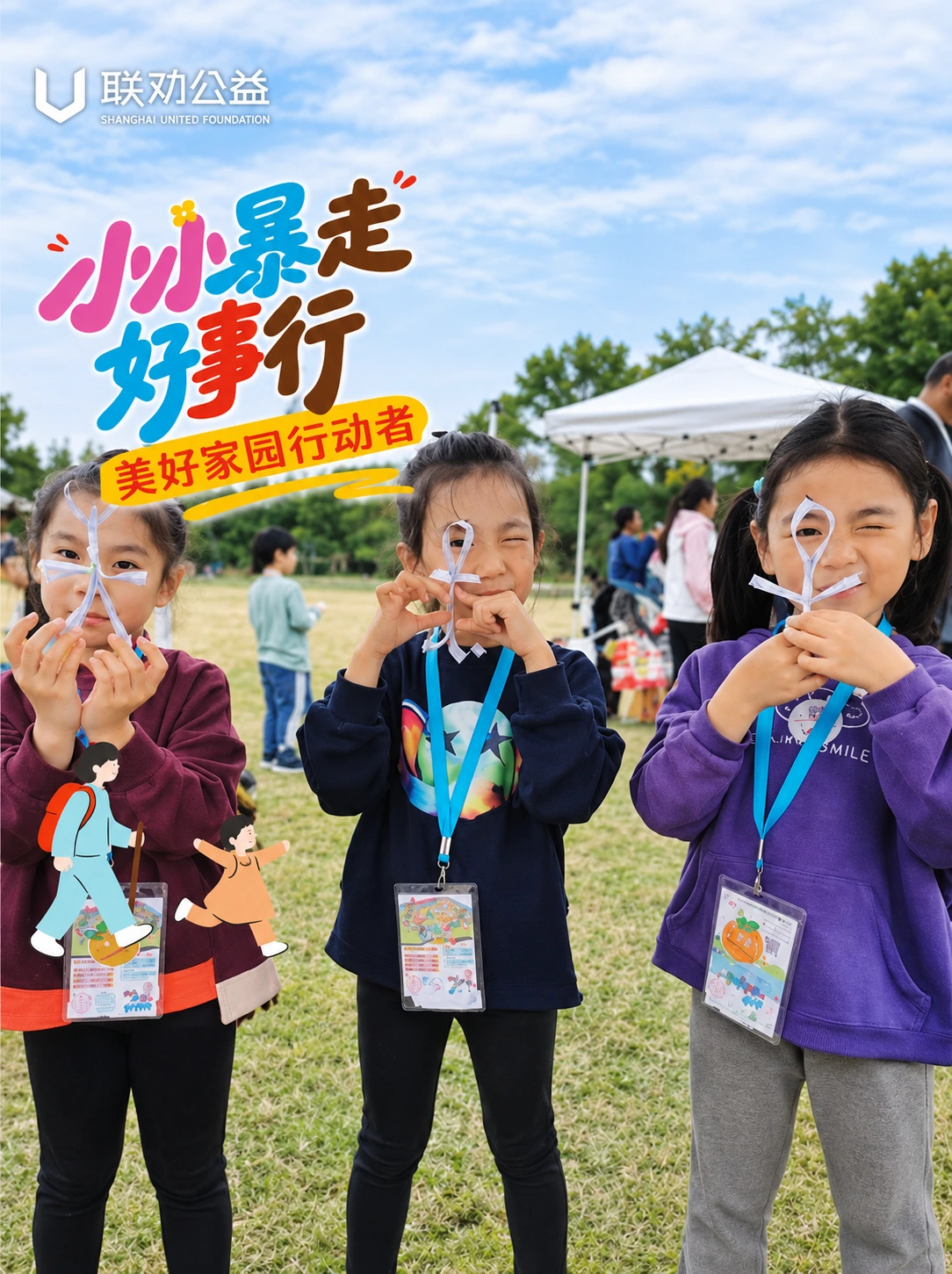
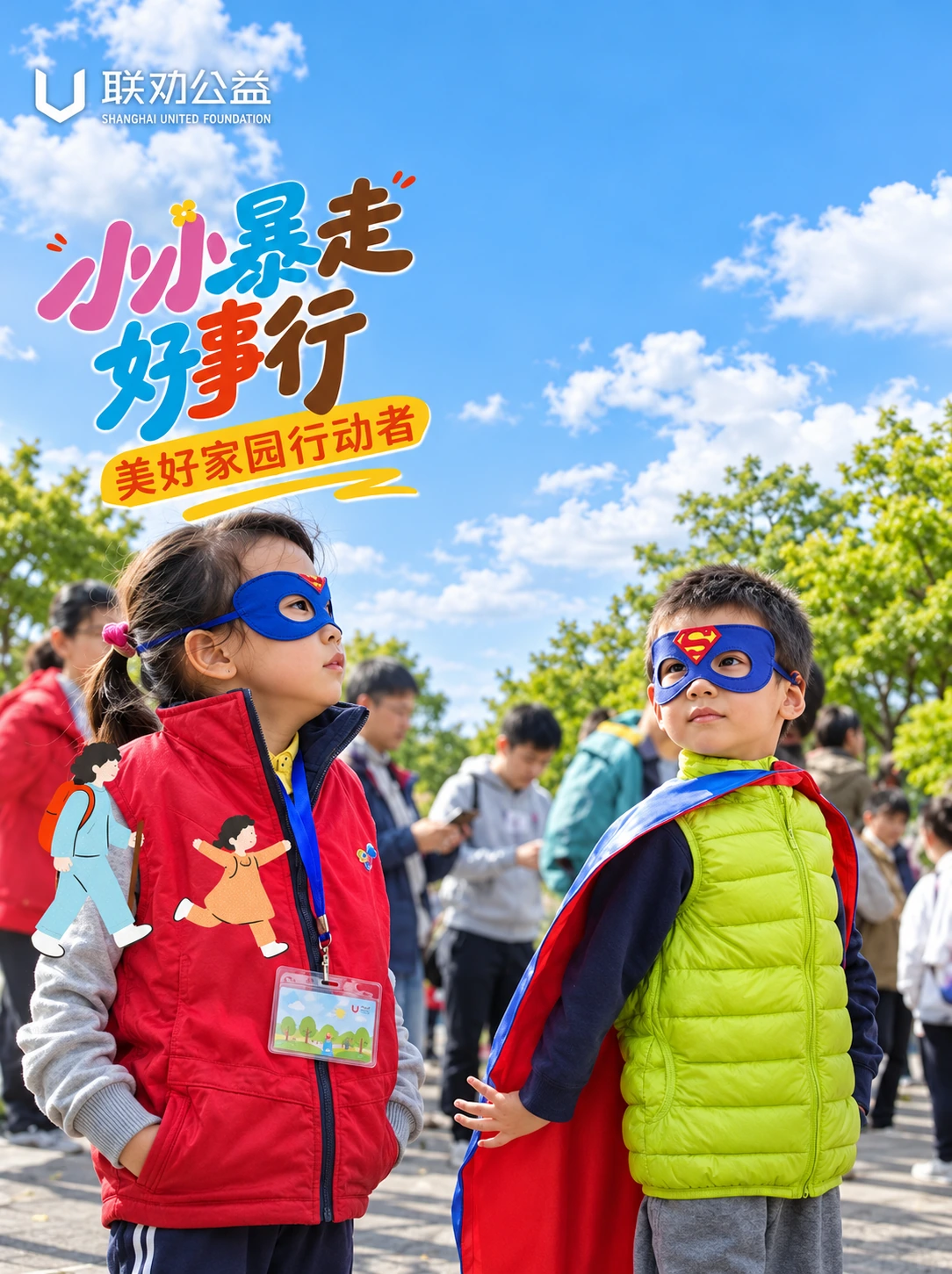
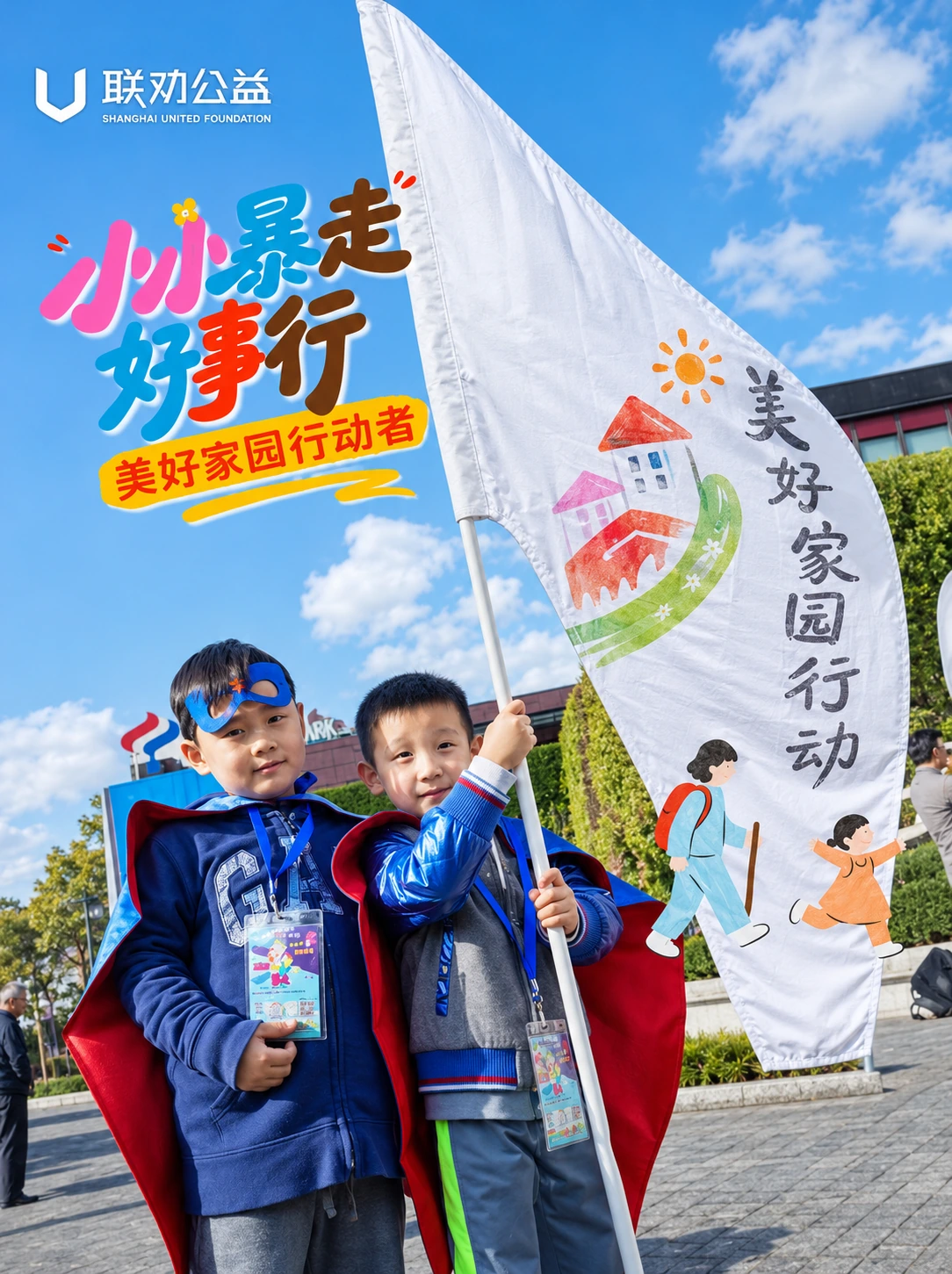
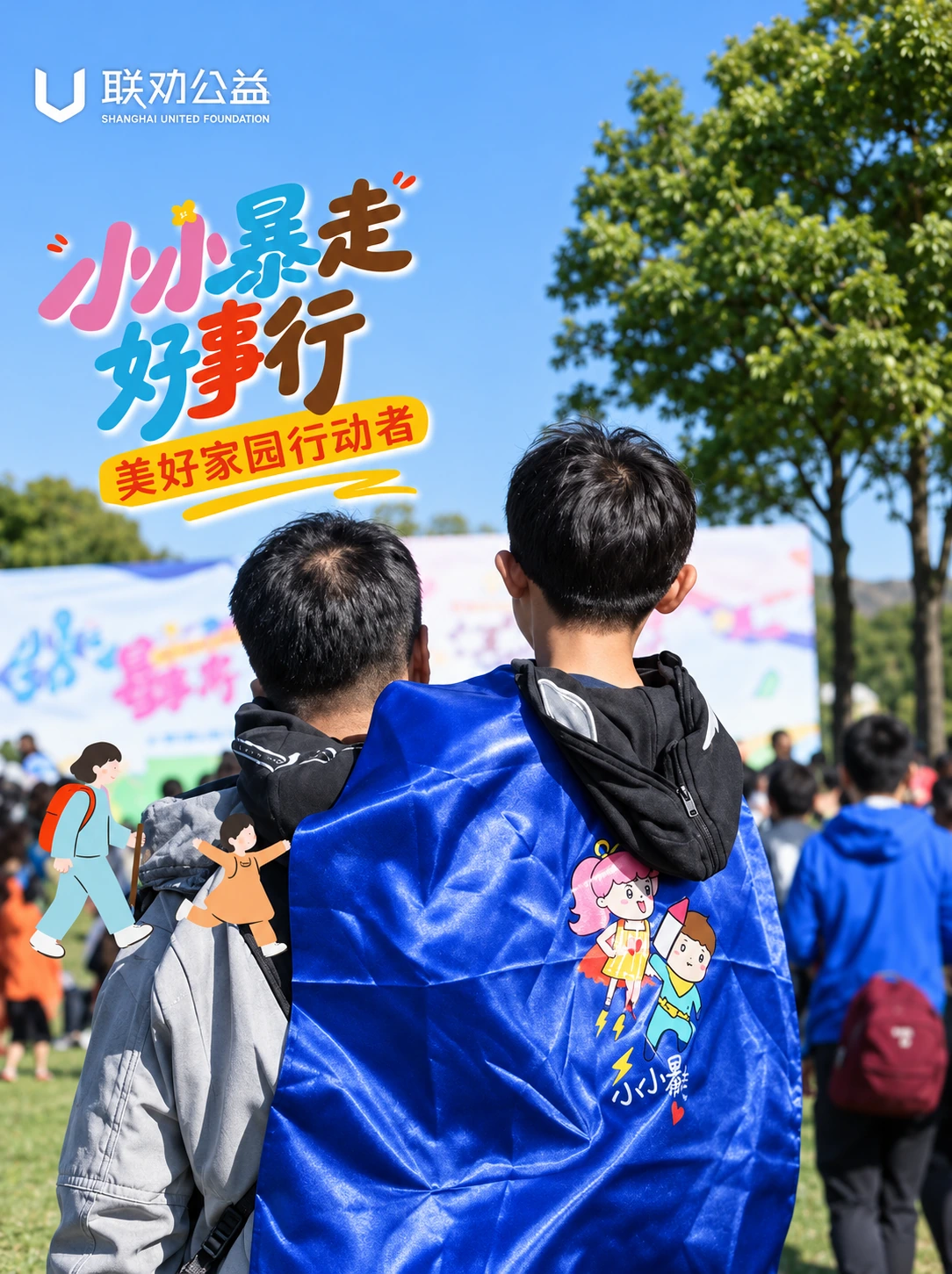
Event posters provided by Shanghai United Foundation, with registration information removed using AI.
The event page puts eligibility, timing and participation rules up front so individuals and families can see how to register and whether to form a team. In-person events can use on-site check-in. The virtual walking challenge uses a route map, checkpoints and mileage to show progress along the way. Completion and fundraising have their own goals, so participants can see what they’ve achieved in each.
The participation history design brings together past activities, donations and event reports, with a map of the regions participants have unlocked. People can revisit an event to see which project their fundraising supported. Organizers have a place to post follow-up updates and can reuse templates for online challenges or in-person events, adjusting the rules as needed.
Inside the mini program

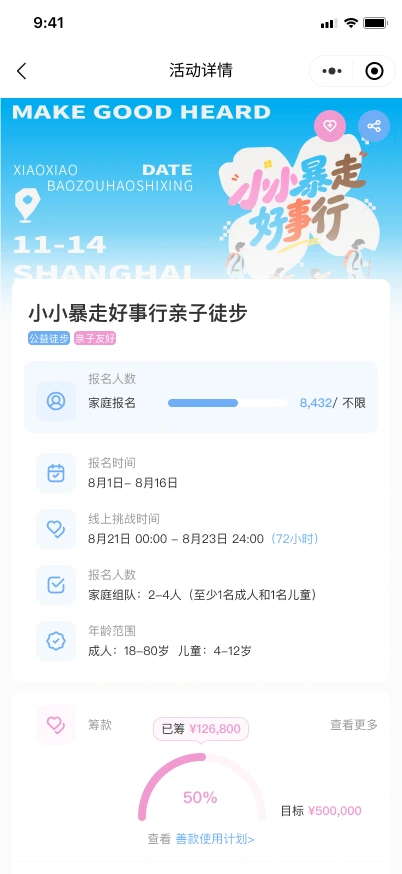
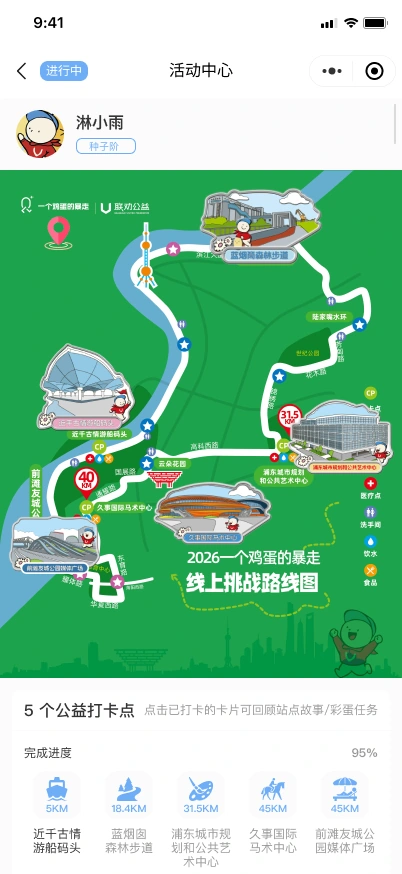
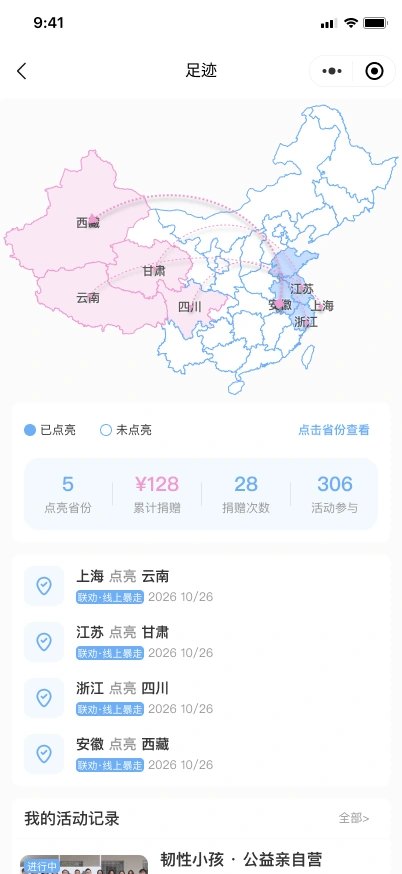
The first image shows the current mini program. The other images are excerpts from the design files, and the figures shown are illustrative.
Building on the event model, the phase-two proposal explores how employers could run team challenges, volunteering and environmental activities. Configurable measures such as steps, distance and volunteer hours would let teams track participation by event and connect employee actions to donations matched by the company, nonprofit projects and reports on what the activity achieved.



 Fire safety and security