


In an occupied older building, the hardest part of a fire safety retrofit is often getting the work started. Some buildings were built without fire water tanks and have limited space or structural capacity for new tanks, pumps and pipework. Even a conventional wired alarm retrofit can mean routing cables through walls and across floors, coordinating access and working around residents. The longer the work is held up, the longer residents wait for the benefit of earlier detection.
A practical route to improving older buildings
In October 2025, Hong Kong’s Fire Services Department announced a pilot for IoT fire detection in 10 target buildings of six storeys or fewer. As the department describes it, the system can sound a local alarm while also relaying the fire signal to the Fire Services Communications Centre, giving the department earlier notice.
Following the pilot, Circular 3/2026 set out how eligible target buildings of six storeys or fewer can use IoT fire detection together with portable extinguishers to meet the requirements for hose reels and manual fire alarm systems. Other applicable fire safety requirements still apply. The arrangements for target buildings of seven storeys or more are set out separately in Circular 7/2026.
I think the department deserves credit for starting with the realities of occupied buildings: available space, disruption to residents and what owners can afford to build. For buildings where work has stalled, reducing the scale of construction can get early detection and reporting in place sooner. Less cabling can cut installation work and disruption, and a system that tells teams where to look can also reduce the time spent tracing faults later.
- Fire Services Department Circular 3/2026 (PDF, Chinese)
- Fire Services Department circulars, including 7/2026
- Government briefing on the pilot and retrofit constraints (Chinese)
Hong Kong Fire Services Department pilot launch
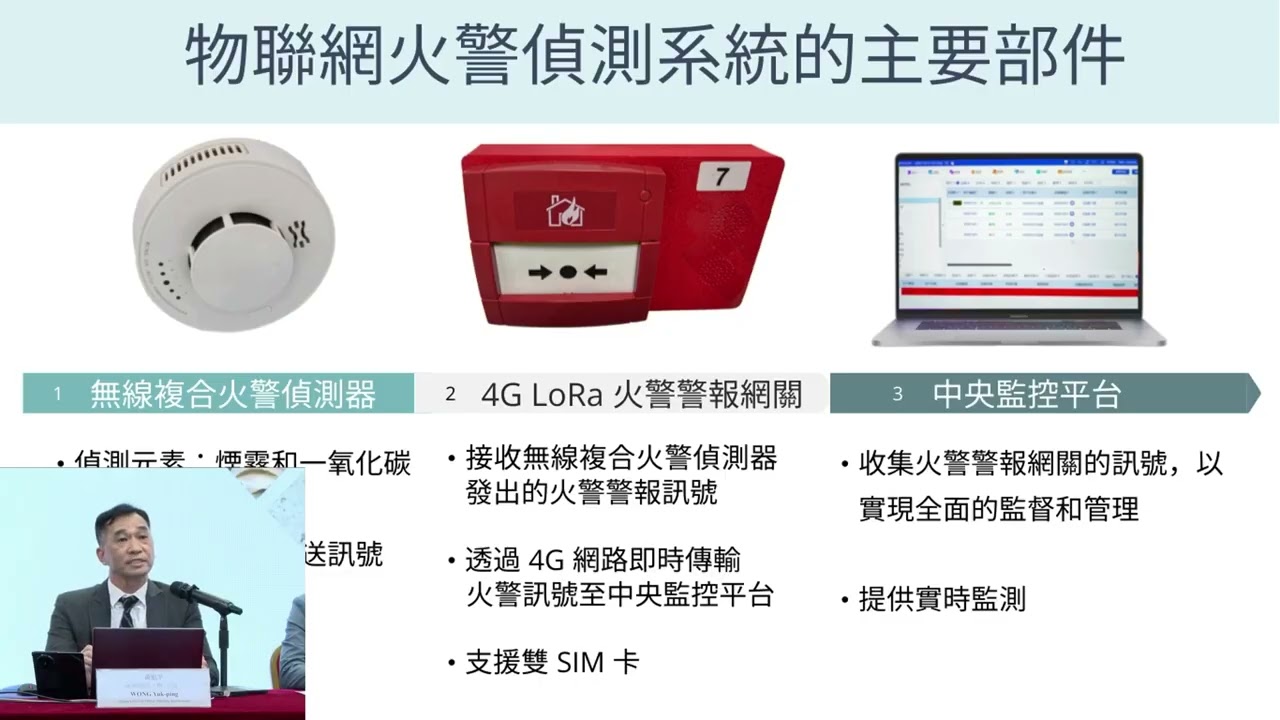 Watch the original press conference on YouTube
What matters once the system is installed
On our Hong Kong retrofit project, we worked with our partner to connect on-site devices to gateways over LoRa and send status updates and alerts over 4G to Nuoyi Cloud’s monitoring platform. LoRa reduced the need for on-site cabling. Timely reporting also depends on dependable devices, a reliable communications path and a team that can act on what the platform shows.
Devices have to stay ready. When choosing connected devices, we look for dependable operation and clear low-battery and fault reporting. Maintenance teams should be able to spot a device that needs attention before it is relied on in an emergency.
Alerts need to reach the people who act. Walls, stairs and floors affect radio coverage. We would test from the actual installation point through to the receiving end, checking both the local alarm and the location shown remotely. We would also check whether the duty team is told when a device goes offline or loses its connection.
Maintenance teams need to know where to go. The platform should identify the building, floor and device and distinguish fire alarms from maintenance issues. That lets staff route a fire alert to responders and a device fault to the maintenance team. Knowing where to start can mean less time inspecting and tracing faults on site.
That is why I think this is a good design direction. It answers two practical questions: can we install it soon in a building where people still live, and can those residents still rely on it to raise an alarm years later? Both matter if the retrofit is going to improve fire safety.