


Cover: an archival view of Shenzhen’s Vanke City, photographed by Liu Meng and uploaded in 2010. Cropped and converted to WebP under the original licence. Original photograph · CC BY-SA 3.0 · Nanfang Daily’s coverage of smart communities in Shenzhen
A pump keeps failing. Can the property manager see which pump it is, how often it has been repaired and who signed off the last job? If that still takes a search through group chats and calls to three people, an alert on a dashboard is hard to act on. A useful starting point for property data governance is a work order that carries those records from report to resolution.
What practitioners say: capture data as part of the job
Li Chuan, then chief data officer of CIFI Ever Sunshine Services, argued in a public talk that digitisation should start with what front-line staff need to deliver a good service. He described work-order handling and energy records, and highlighted how difficult it can be to check the source of a manually compiled figure.
Our reading is that the most useful entry point is the work staff already do. When a technician closes a job, they can confirm the equipment ID, cause and replacement parts as part of the same task. A manager can then find the repair history by asset, without rebuilding it from spreadsheets at month-end.
What Shenzhen standardises before systems exchange data
Shenzhen’s smart property services and data exchange standard, DB4403/T 440–2024, covers platform functions, data formats and exchange. Its equipment section addresses asset registers, inspections, servicing and faults. In a separate published example, Futian’s housing and construction bureau linked small works filings with property projects so checks, corrective actions, responses and follow-up could be tracked in a single workflow.
In practice, start by giving each building, space and equipment item a stable ID. Agree what staff record when a fault is reported, assigned, resolved and checked. Once an alert, inspection and repair order point to the same pump, it is easier to tell a recurring equipment problem from duplicate reports.
- Shenzhen smart property services and data exchange standard (Chinese)
- Futian housing bureau: smart property oversight and small works filings (Chinese)
Our Futian project: following the map back to the record
In the Futian government property project, asset, ownership, usage and operating records were spread across workflows. We agreed on the data definitions, then connected business records to buildings and individual properties on the map. Managers can see a district-level figure and open the records behind it.
A residential or commercial site could start with a single recurring task such as repairs. Once the register and inspections are linked, AI can suggest categories, bring up relevant records or flag recurring faults. Track first response time, repeat reports and the completeness of closure records before broadening the rollout.
Further reading: original figures from a Shenzhen field study
Researchers from the China Academy of Building Research and Harbin Institute of Technology, Shenzhen, ran a 92-day field study of IoT lighting and HVAC control in a Shenzhen office building. Figure 2 maps the sensor locations. Figure 3 shows the path from sensing to control and actuation.
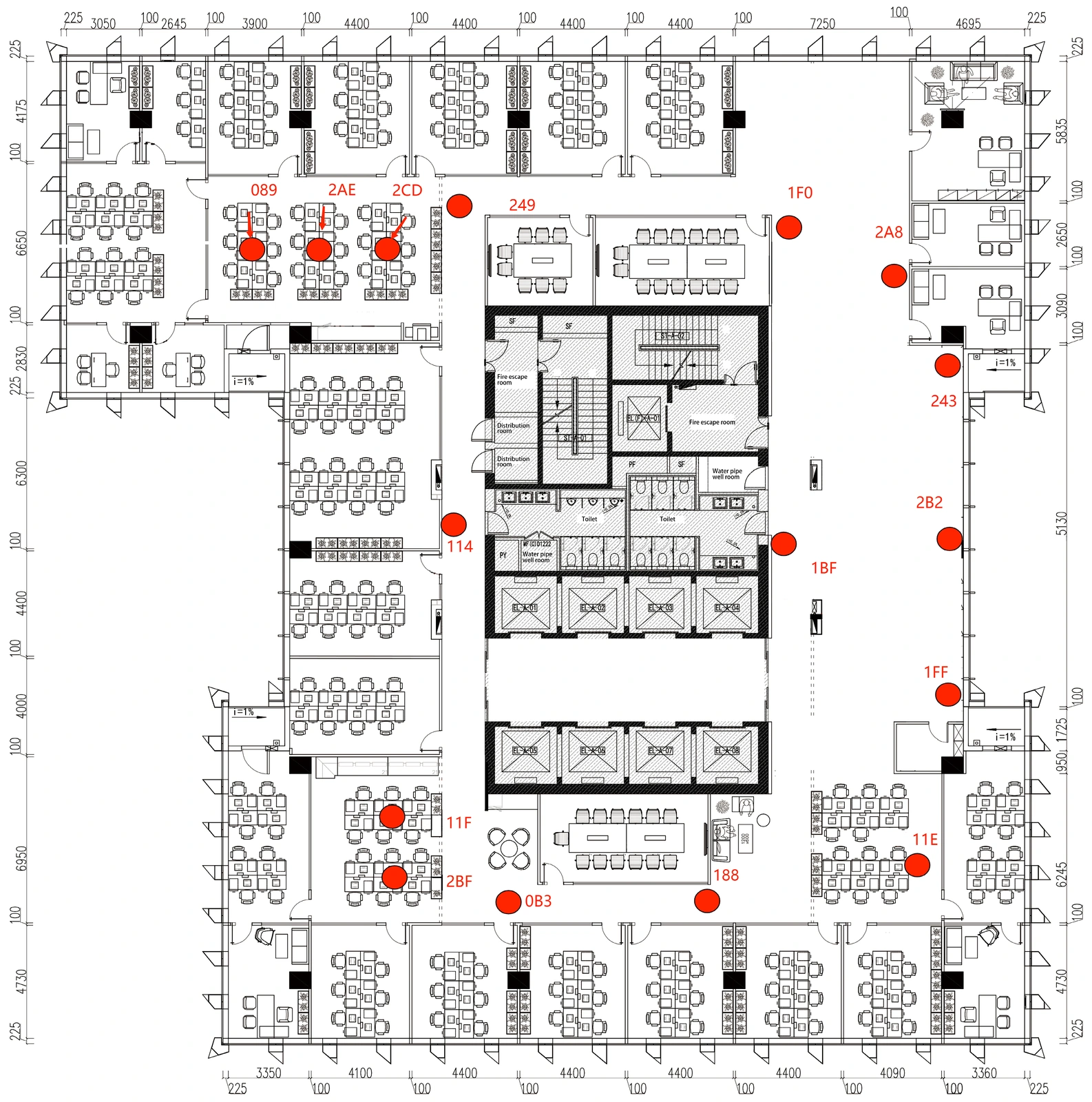
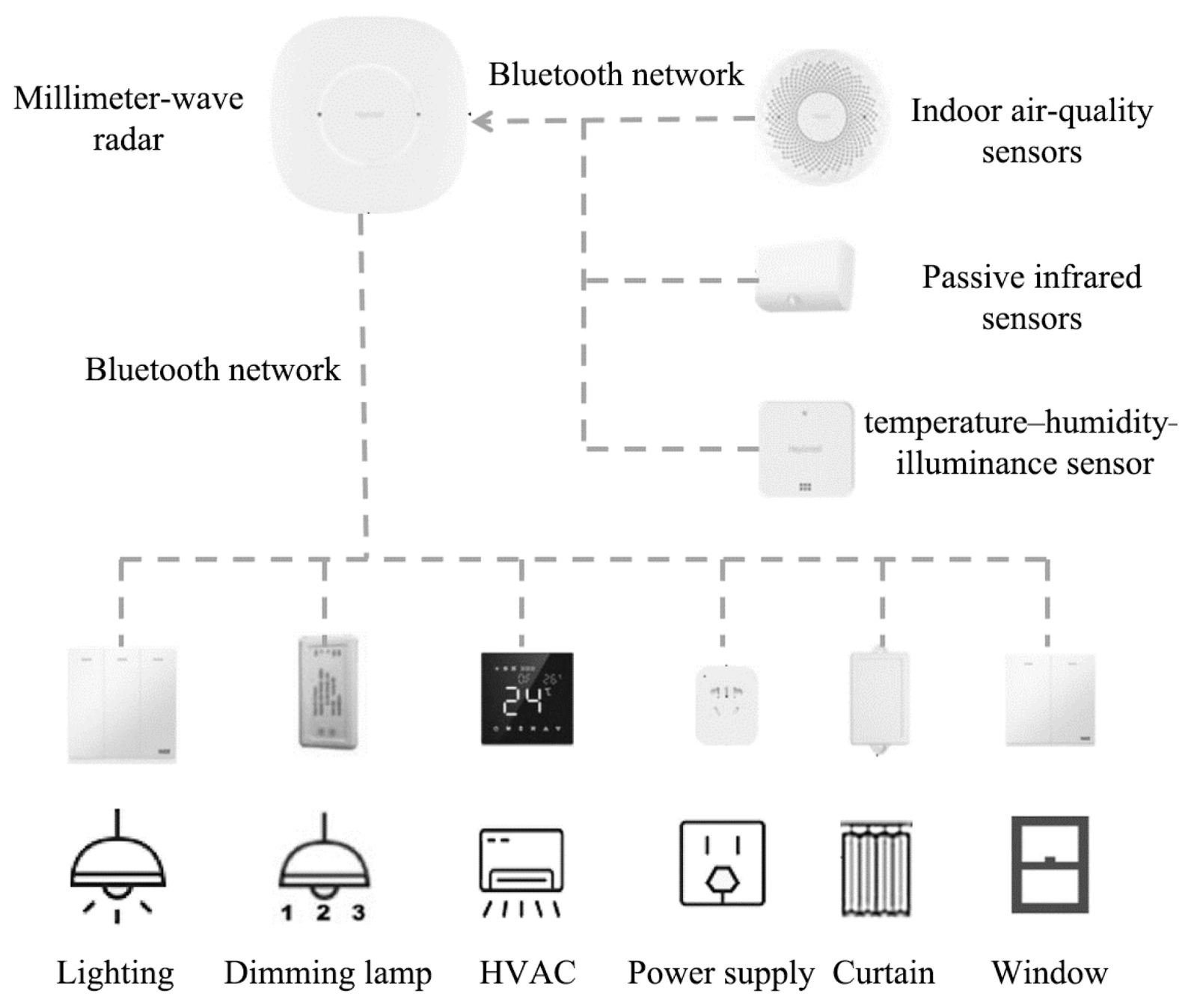
Both figures are from Mingxuan Wu and Biao Yang, Buildings (2026). Resized proportionally and converted to WebP. Read the open-access paper · CC BY 4.0